
Specifying an HDPE piping system is not simply a matter of selecting pipe dimensions and ordering fittings separately. A dependable system is specified as one connected solution: pipes, fittings, fusion method, application conditions, and technical documentation must work together.
For consultants, engineers, water authorities, contractors, and distributors, a complete HDPE pipe and fittings specification helps reduce site risks, improve installation consistency, and support long-term network performance.
1. Define the application conditions first
Every HDPE system begins with its operating environment. Confirm the intended medium, operating pressure, temperature range, installation method, soil conditions, and any applicable water-quality or regulatory requirements.
Key considerations include:
- Potable water, wastewater, irrigation, industrial fluids, gas, or slurry service
- Design pressure and surge-pressure allowance
- Above-ground, buried, marine, or trenchless installation
- Ambient and operating temperatures
- Chemical compatibility and UV exposure
- Relevant local standards and approval requirements
These conditions influence material grade, SDR rating, jointing method, and fitting design. A pipe that is suitable in one application may not be the best solution in another.
2. Select pipe material and dimensions as part of the design
HDPE pipe selection should be based on the design duty, not only nominal diameter. Confirm the pipe’s PE grade, pressure class, SDR, wall thickness, and required standard.
The system design should also consider hydraulic requirements, flow velocity, pressure losses, installation loads, and expected service life. Consistent dimensions and material quality across the project make installation and future maintenance more predictable.
Polyware HDPE pipes can be specified alongside compatible connection solutions to help create a coordinated system rather than a collection of separate products.
3. Treat fittings as critical system components
Fittings are not accessories. They determine how the system changes direction, branches, transitions to other materials, and connects to valves or equipment.
A robust HDPE pipe and fittings specification should identify:
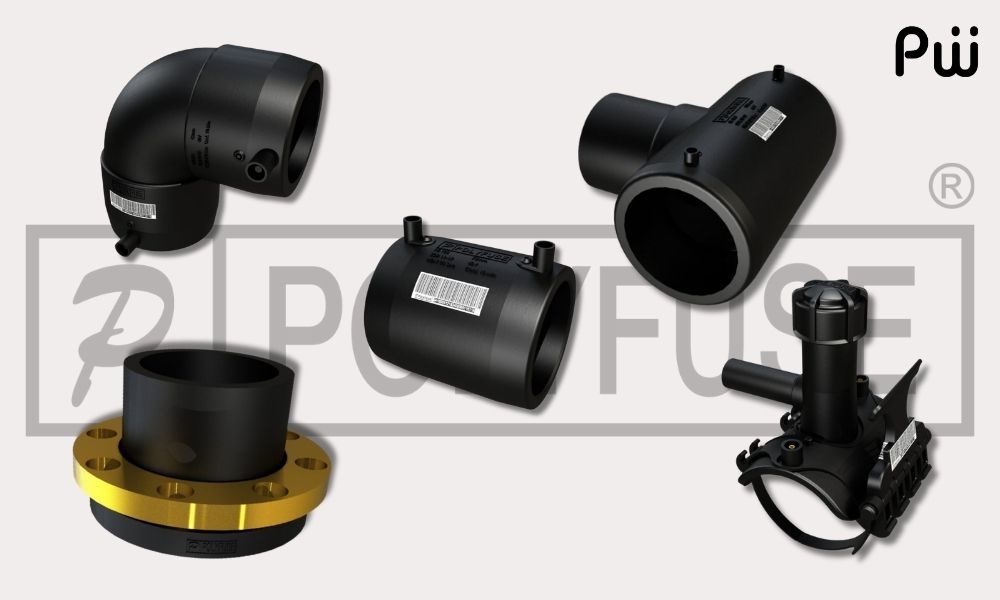
- Required fitting types: elbows, tees, reducers, end caps, stubs, flanges, and transition fittings
- Pressure rating and SDR compatibility
- Connection type and fusion compatibility
- Dimensional tolerances and applicable standards
- Any non-standard geometry or project-specific connection requirements
For complex networks, tailor-made fittings may be the most practical option. Custom fabricated fittings can address unusual angles, large diameters, special branches, or challenging interfaces while keeping the design aligned with the rest of the HDPE system.
4. Specify the fusion method, not just the fitting
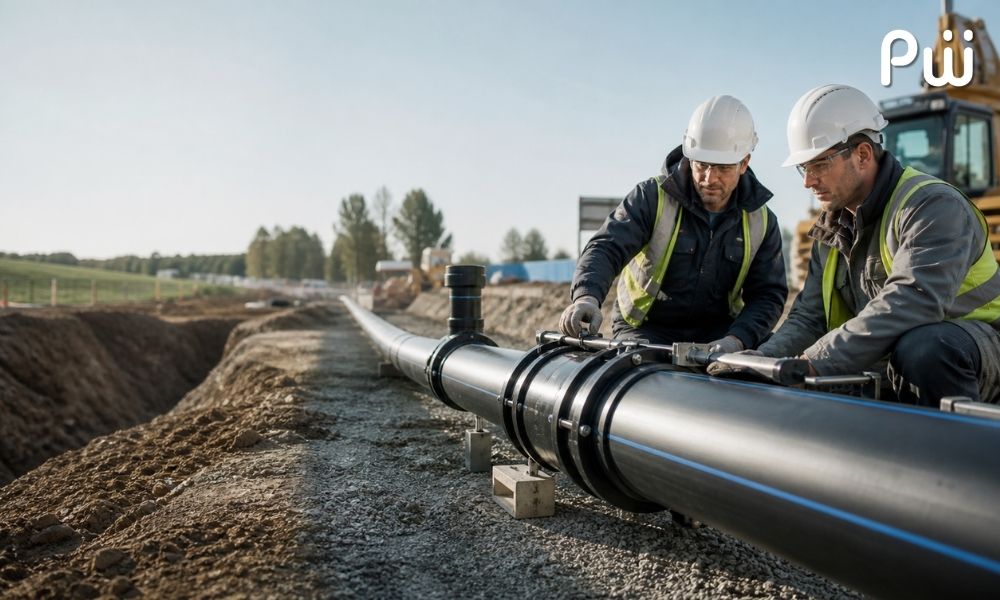
The quality of an HDPE network depends heavily on its joints. Fusion creates a continuous, leak-resistant connection, but the chosen process must be suitable for the pipe, fitting, site conditions, and installation team.
The specification should clearly state whether the project uses:
- Butt fusion fittings for compatible pipe ends and controlled alignment
- Electrofusion fittings for repairs, tie-ins, restricted spaces, or complex connections
- Mechanical or flanged connections where disassembly or connection to other materials is required
Polyfuse electrofusion and butt fusion fittings provide system-compatible connection options for HDPE installations. The specification should also cover approved fusion procedures, machine requirements, operator competence, traceability, inspection, and testing.
5. Plan for installation realities
A technically sound product selection can still fail if the installation plan is incomplete. Specify practical site requirements such as handling, storage, excavation, bedding, pipe alignment, cleaning, weather limitations, and testing procedures.
For fusion work, ensure that the contractor has suitable equipment, trained personnel, and a documented quality-control process. Site records should capture the relevant fusion parameters, joint identification, and pressure-test results.
This level of preparation reduces rework, avoids incompatible substitutions, and gives project teams clearer accountability.
6. Require complete technical documentation
Technical documentation is what turns a product selection into a defensible engineering specification. Request clear, current documents for every major system component, including:
- Product data sheets
- Dimensional and pressure-rating information
- Material and compliance certificates
- Fusion instructions and recommended parameters
- Installation and handling guidance
- Test procedures and quality-control requirements
- Project-specific drawings for tailor-made fittings
Documentation should be reviewed as a connected package. Pipe, fittings, and fusion instructions should support the same design basis and application conditions.
A whole-system approach delivers better outcomes
The most reliable HDPE projects are specified as systems, not as separate pipe and fitting line items. When pipes, Polyfuse fusion fittings, tailor-made fittings, installation methods, and technical support are coordinated from the outset, project teams can reduce uncertainty across procurement, construction, commissioning, and operation.
For your next project, start with the complete system question: not only “Which pipe do we need?” but “How will every component perform together?”
Connect with Polyware
With over 30 years of experience in Malaysia, Polyware is a trusted manufacturer specialising in high-quality HDPE pipe fittings and complete piping system solutions.
As a one-stop pipeline solution provider, we offer:
- Over 1,000 types of PE pipe fittings
- Tailor-made solutions for project-specific requirements
- In-house mould making (OEM available)
- Professional technical consultation support
- Industry training and knowledge sharing
Our house brands, PENGUIN (mechanical/compression fittings) and POLYFUSE (electrofusion solutions, butt fusion solutions, socket fusion solutions), are designed to deliver reliable, long-term performance across water supply, biogas, cable ducting, mining, irrigation, aquaculture and industrial applications.
Interested in our products or solutions? Our team is ready to assist you.
- Website: https://polyware.com.my/
- Email: [email protected]
- Oversea Support: +6012-9128237
- Domestic Support (Semenyih): +6012-5069281
- Domestic Support (Kuching): +6010-2394134
We aim to respond to all enquiries within 24 hours. For urgent assistance, feel free to contact us directly.